
Membrane Condition Surveys
Independent electronic leak detection and integrity testing for flat roof membranes
Two Reasons To Test, And We Do Both
Every membrane condition survey answers one of two questions. The equipment is often the same. What you’re asking of it is completely different.
Integrity Testing For New & Recently Installed Membranes
Integrity testing verifies a membrane that should be sound. It’s carried out on newly installed waterproofing, typically before handover, and it looks for two things:
- Workmanship issues – poor welding, missed welds, incomplete seams, inadequate detailing at upstands and penetrations
- Damage from following trades – cuts, impact and mechanical damage inflicted on a finished membrane by everyone who came onto the roof afterwards
That second category is the one that costs people money. A membrane can be installed perfectly and breached a fortnight later by a dropped tool, a dragged ladder or a plant installation. Testing before handover establishes the condition of the roof at the moment responsibility transfers, which is exactly when it matters.
Usually commissioned by: main contractors, roofing contractors, building owners, consultants and clerks of works.
Usually carried out: at practical completion, before handover, after follow-on trades have finished, or ahead of warranty sign-off.
Leak Detection for Existing & Older Membranes
Leak detection is investigative. Something is wrong, or might be, and the source needs establishing. It applies to:
- Existing or ageing membranes where condition is unknown
- New membranes that have developed a problem after handover
- Roofs under scheduled maintenance where condition is tracked over time
- Buildings with an active leak nobody has been able to locate
The last one is the most common reason people call us. Water is coming in, several repairs have already been attempted, and the leak is still there — usually because the earlier work targeted the stain rather than the breach.
Usually commissioned by: facilities managers, building owners, managing agents, consultants and insurers.
Usually carried out: when a leak presents, as part of planned maintenance, before a building changes hands, or ahead of refurbishment decisions.
The Right Test, Chosen For Your Roof
Both integrity testing and leak detection use non-destructive electronic methods. There are three, selected on membrane type, roof construction and the conditions on the day:

High Voltage Dry Test
Also known as the holiday detector test, carried out on dry membranes

Earth Leakage Wet Test
Our Dynamic Area Mapping method, carried out in wet conditions

Scan-Map™ & EPDM
A faster wet method, and the only one of the three that tests EPDM
Our survey teams carry both dry and wet capability testing
This is so the method is chosen on-site rather than committed to in advance. If the weather turns, the survey adapts. Most commercial waterproofing PVC, TPO, asphalt, felt and liquid applied systems can take any of the three. EPDM is the exception, and needs Scan-Map™.
The Benefit of Targeted Repairs
Without proper testing, repairs can become a process of trial and error. That can waste time, increase cost and still leave the original issue unresolved.
A membrane condition survey helps reduce that risk by identifying the areas that need attention.
Your Roof Surveys Support:-
Faster Decision-making
Reduced repair costs
Less Disruption to The Building
Better evidence for handover
Improved Confidence in Roof Condition
Longer-term Maintenance Planning
What You Receive
A record of the areas tested and the method used on each
Every defect located, numbered and categorised
Photographic evidence of each defect
Marked-up drawings showing the exact position of every breach
A clear statement of any areas that could not be tested, and why
The report is written to be used. A roofing contractor can repair directly from it. A consultant can rely on it. A facilities team can file it as a condition baseline for future comparison.
Roof Types and Recommended Test Methods
A quick reference for matching roof build-ups to the right survey method
Not every roof can be tested the same way. The waterproofing system, the deck beneath it and any surfacing on top all determine which method will give reliable results — and, in some cases, whether the roof can be tested at all without lifting overburden.
The guide below sets out the common commercial roof build-ups we survey, with a short description of each and the test method we’d recommend. Holiday Detector testing suits exposed membranes on conductive decks; the Earth Leakage Wet Test traces breaches across an area where a dry test isn’t suitable; and some systems are better assessed visually or need a layer removed before testing. If you’re not sure which category your roof falls into, tell us the deck, the waterproofing and what sits on top, and we’ll recommend the right approach.
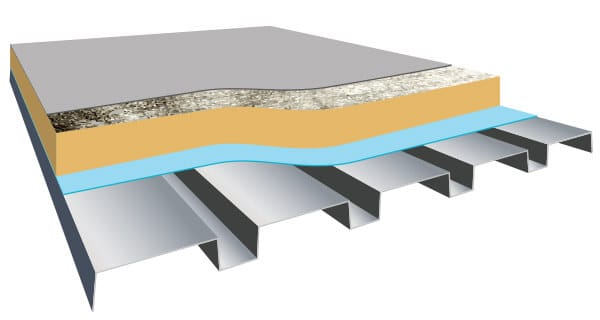
Metal deck, PVC membrane, foil-faced insulation
Single-ply PVC on a conductive metal deck; membrane exposed and fully testable.
Holiday Detector Test
Earth Leakage Test
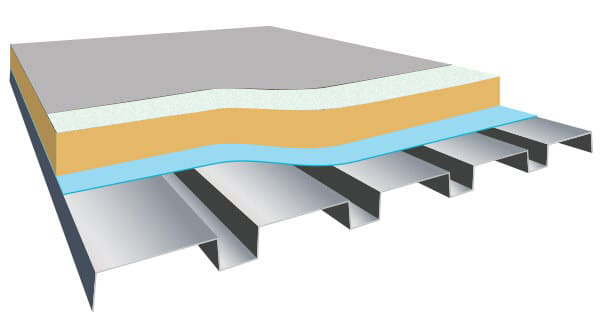
Metal deck, PVC membrane, tissue-faced insulation
Single-ply PVC on a conductive metal deck; membrane exposed and fully testable.
Holiday Detector Test
Earth Leakage Test
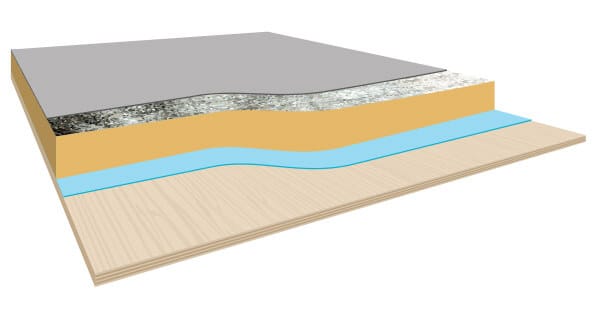
Plywood deck, PVC membrane
Single-ply PVC over a non-conductive plywood deck, so wet tracing isn’t possible.
Holiday Detector Test
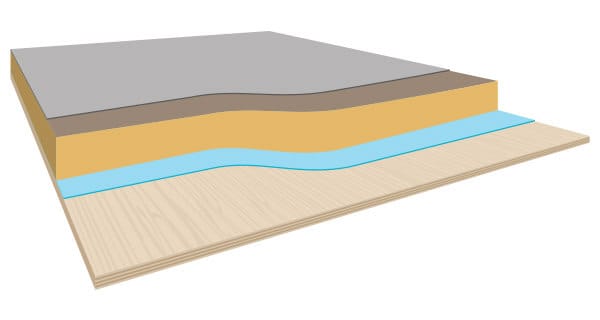
Plywood deck PVC membrane – tissue-faced insulation
Need….
Holiday Detector Test

Metal deck fleece-backed PVC over plywood overlay
PVC bonded to a plywood overlay above the insulation; the ply breaks the earth path.
Holiday Detector Test

Metal deck, liquid-applied over plywood overlay
Liquid-applied waterproofing on a plywood overlay above the insulation.
Holiday Detector Test
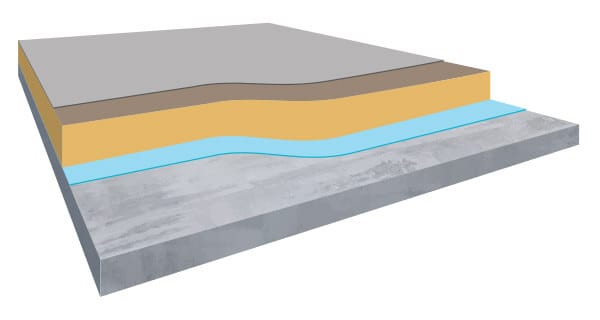
Concrete deck, EPDM membrane
EPDM on a concrete deck; non-conductive membrane not suited to electronic integrity testing.
Visual Inspection
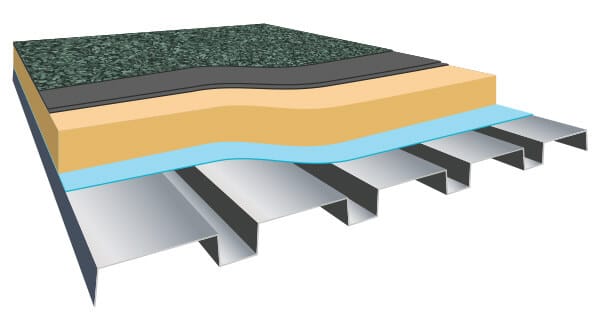
Metal deck, built-up bituminous felt
Two layers of felt plus a felt cap on a conductive metal deck; exposed and testable.
Holiday Detector Test
Earth Leakage Test
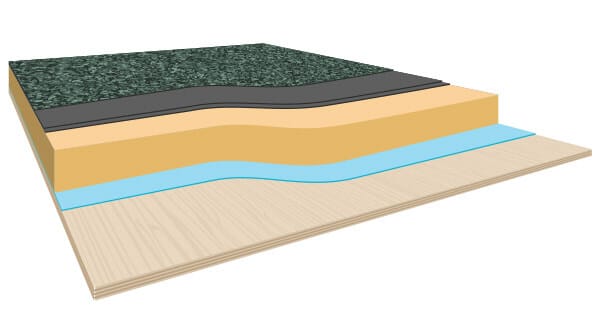
Plywood deck, built-up bituminous felt
Two layers of felt plus a felt cap on a non-conductive plywood deck.
Holiday Detector Test

Hot melt roof
Monolithic hot-melt waterproofing, usually beneath a surfacing; suited to wet area tracing.
Earth Leakage Test

Asphalt roof
Mastic asphalt waterproofing; exposed and testable.
Holiday Detector Test
Earth Leakage Test
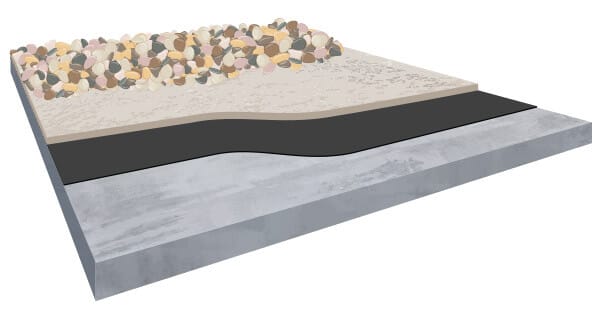
Ballasted roof
Membrane loose-laid under stone ballast; wet tracing across the area where accessible.
Earth Leakage Test
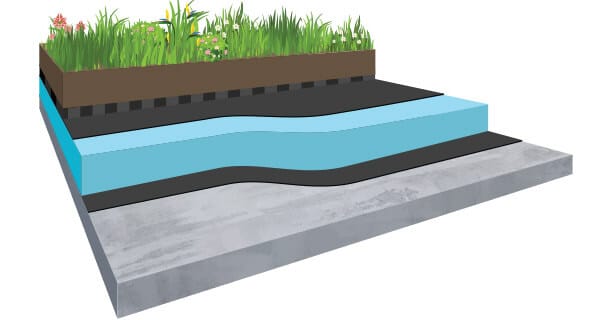
Green roof
Membrane beneath a vegetated build-up; wet area tracing.
Earth Leakage Test

Inverted roof — ballast
Insulation and stone ballast sit above the membrane.
Requires paving removal to test
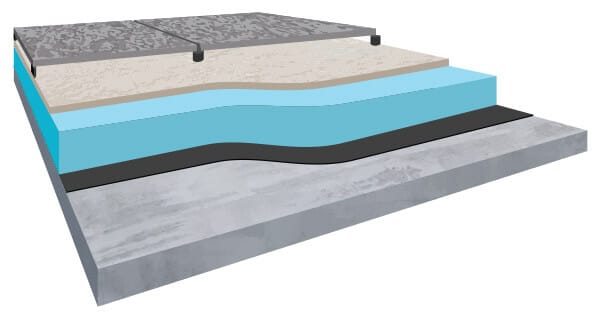
Inverted roof — paving
Insulation and paving slabs sit above the membrane.
Requires paving removal to test
Not sure which applies? We’ll recommend the right method before anything is booked.
Call 0845 257 7663
Our Roof Survey & Leak Detection Services

Electronic Leak Detection
Non-destructive moisture mapping helps locate hidden moisture within the roof build-up and understand the extent of the problem. This supports targeted repairs and better maintenance decisions.
High Voltage Dry Test
A high-voltage integrity test carried out on dry, exposed membranes, identifying pinholes, punctures, discontinuities and workmanship defects across the membrane surface.
Earth Leakage Wet Test
Carried out in wet conditions during rainfall or after the test area has been wetted down. This method traces the direction of current flow back to the point where moisture is entering the membrane. That makes it the strongest choice when a leak is active and its source needs finding.
Scan-Map™ and EPDM Testing
A faster low voltage wet method, and the one that opens up membranes the others can’t reach. Conventional electronic testing relies on the membrane being non-conductive, which rules out EPDM entirely. Scan-Map™ tests it.
Membrane Condition Surveys
Independent electronic leak detection and integrity testing for flat roof and waterproofing membranes. Ideal for identifying breaches, pinholes, punctures, installation defects and membrane failures on new or existing roof systems.

Thermal Imaging Leak Detection
Thermal imaging roof surveys help identify saturated insulation, entrapped moisture and areas of concern that may not be visible during a standard inspection. A useful method for predictive maintenance and roof condition assessment.

Moisture Mapping
Non-destructive moisture mapping helps locate hidden moisture within the roof build-up and understand the extent of the problem. This supports targeted repairs and better maintenance decisions.

R.A.I.N.™ Roof Monitoring
R.A.I.N.™ is Surveyroof’s roof monitoring and early warning service framework, supporting continuous insight into roof condition using sensor-based monitoring technology. It helps detect moisture and roof incidents earlier, particularly where ongoing visibility is important.

Visual Condition Surveys
Detailed visual roof condition surveys with photographic reporting for industrial metal roofs, aluminium standing seam, pitched tiled roofs and other roof areas where a clear condition report is needed.

Roof Maintenance Programmes
Planned roof maintenance surveys designed to help extend roof life, reduce unplanned costs and identify issues before they develop into larger failures.

Pre Installation Solar Surveys
Planned roof maintenance surveys designed to help extend roof life, reduce unplanned costs and identify issues before they develop into larger failures.

Industrial Roof Surveys
Independent industrial roof surveys and inspections for factories, manufacturing plants, warehouses, industrial estates, processing facilities and logistics operators across the UK.

Commercial Roof Surveys
Independent commercial roof surveys and inspections across the UK for property owners, facilities managers, managing agents, retailers, hoteliers, logistics operators and solar installers.