
ScanMap™ and EPDM Low Voltage Roof Membrane Test
Independent Roof Membrane Testing That Gives You Clear Answers

Check the integrity of your roof membrane before problems spread
When you are responsible for a commercial or industrial flat roof, you need to know whether the waterproofing membrane is doing its job.
A roof can look finished, clean and professionally installed from the surface, but that does not always mean it is watertight. Small punctures, open seams, weak details and hidden breaches can lead to expensive leaks, damaged insulation, internal disruption and arguments over who is responsible.
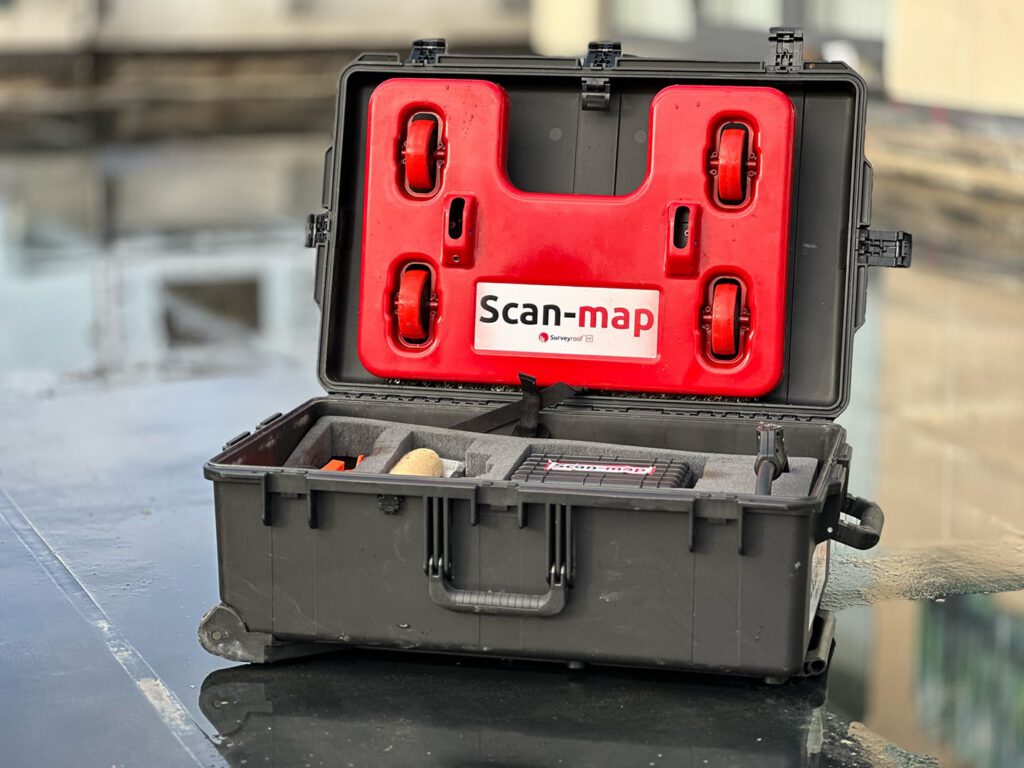
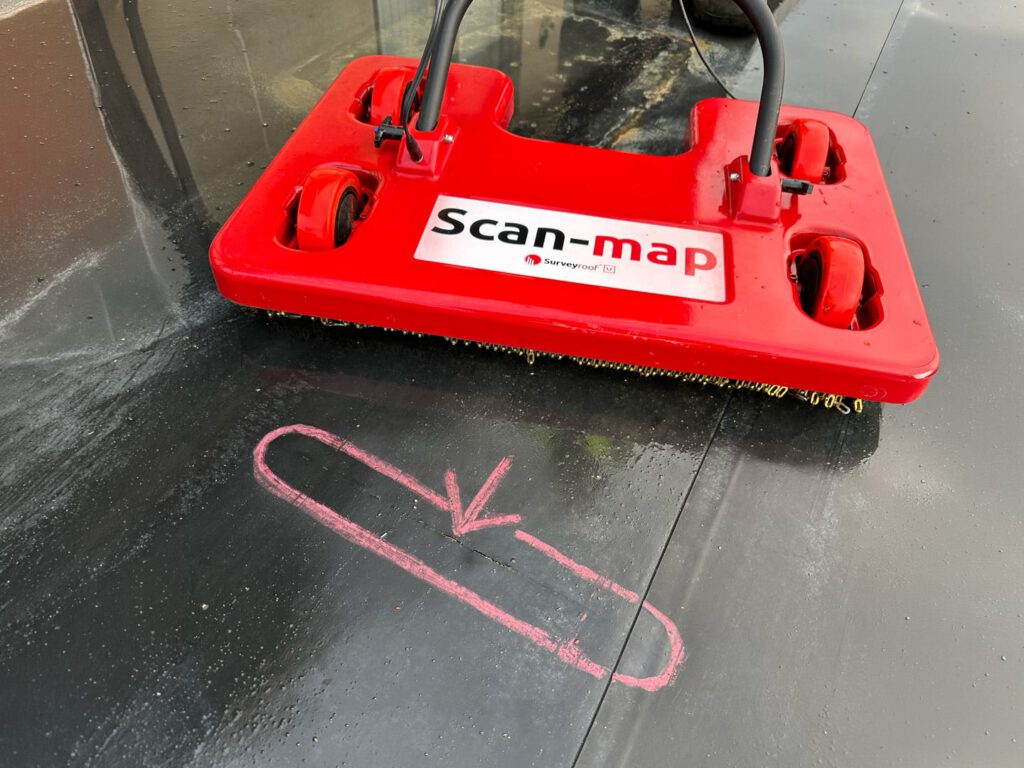
Scan-Map™ low voltage membrane testing gives you a clear, professional way to check the integrity of your roof membrane before small defects become costly failures.
What Scan-Map™ Helps Identify
Scan-Map™ low voltage membrane testing is used to help identify possible weaknesses and defects in flat roof and waterproofing membranes.
The aim is simple: to find the defects that matter, record them clearly and help you deal with them before they become bigger problems.
Punctures
Small holes caused during installation, foot traffic, dropped tools or later works can allow water into the roof system if left unresolved.
Pinholes
Tiny defects may be difficult to see by eye but can still compromise the waterproofing layer.
Splits
Movement, stress, damage or installation issues can create openings in the membrane that need targeted repair.
Open laps
Poorly sealed joints can become weak points where water can enter the roof build-up.
Damaged seams
Testing helps identify seam defects that may not be obvious during a visual inspection.
Membrane discontinuities
Breaks or inconsistencies in the waterproofing layer can be located and recorded.
Defects around penetrations
Areas around vents, outlets, fixings, supports, plant and other roof details are common points of failure.
Weaknesses at details and transitions
Upstands, edges, corners, changes in level and interface points are checked because these areas often carry higher risk.
Possible moisture pathways
Testing can help identify where water may be entering or travelling through the roof system.
Designed for Modern Roof Membrane Testing
Modern commercial roof systems can be complex. Some membranes, coatings and roof details are more difficult to assess using traditional inspection methods, especially where defects are small, hidden or located around awkward details. Scan-Map™ is designed to support accurate low voltage testing across suitable roof membrane systems, including areas where a careful, methodical approach is needed.
Has the membrane been compromised?
Testing helps identify whether there are breaches or defects affecting waterproofing performance.
Where are the problem areas?
Defects can be located and recorded, helping repair teams focus on the right areas.
Is the roof ready for handover?
Testing can provide reassurance before the roof is accepted or signed off.
Are further investigations needed?
If issues are identified, the findings can help guide the next practical step.
Not sure which applies? We’ll recommend the right method before anything is booked.
Call 0845 257 7663
Our Roof Survey & Leak Detection Services

Electronic Leak Detection
Non-destructive moisture mapping helps locate hidden moisture within the roof build-up and understand the extent of the problem. This supports targeted repairs and better maintenance decisions.

High Voltage Dry Test
A high-voltage integrity test carried out on dry, exposed membranes, identifying pinholes, punctures, discontinuities and workmanship defects across the membrane surface.
Earth Leakage Wet Test
Carried out in wet conditions during rainfall or after the test area has been wetted down. This method traces the direction of current flow back to the point where moisture is entering the membrane. That makes it the strongest choice when a leak is active and its source needs finding.
Scan-Map™ and EPDM Testing
A faster low voltage wet method, and the one that opens up membranes the others can’t reach. Conventional electronic testing relies on the membrane being non-conductive, which rules out EPDM entirely. Scan-Map™ tests it.

Membrane Condition Surveys
Independent electronic leak detection and integrity testing for flat roof and waterproofing membranes. Ideal for identifying breaches, pinholes, punctures, installation defects and membrane failures on new or existing roof systems.

Thermal Imaging Leak Detection
Thermal imaging roof surveys help identify saturated insulation, entrapped moisture and areas of concern that may not be visible during a standard inspection. A useful method for predictive maintenance and roof condition assessment.

Moisture Mapping
Non-destructive moisture mapping helps locate hidden moisture within the roof build-up and understand the extent of the problem. This supports targeted repairs and better maintenance decisions.

R.A.I.N.™ Roof Monitoring
R.A.I.N.™ is Surveyroof’s roof monitoring and early warning service framework, supporting continuous insight into roof condition using sensor-based monitoring technology. It helps detect moisture and roof incidents earlier, particularly where ongoing visibility is important.

Visual Condition Surveys
Detailed visual roof condition surveys with photographic reporting for industrial metal roofs, aluminium standing seam, pitched tiled roofs and other roof areas where a clear condition report is needed.

Roof Maintenance Programmes
Planned roof maintenance surveys designed to help extend roof life, reduce unplanned costs and identify issues before they develop into larger failures.

Pre Installation Solar Surveys
Planned roof maintenance surveys designed to help extend roof life, reduce unplanned costs and identify issues before they develop into larger failures.

Industrial Roof Surveys
Independent industrial roof surveys and inspections for factories, manufacturing plants, warehouses, industrial estates, processing facilities and logistics operators across the UK.

Commercial Roof Surveys
Independent commercial roof surveys and inspections across the UK for property owners, facilities managers, managing agents, retailers, hoteliers, logistics operators and solar installers.