
Electronic Leak Detection
Pinpoint membrane breaches with independent, non-destructive testing.
Electronic leak detection is the testing layer within a membrane condition survey – the method we use to find defects, whether we’re verifying a newly installed membrane or tracing an active leak on an existing one.
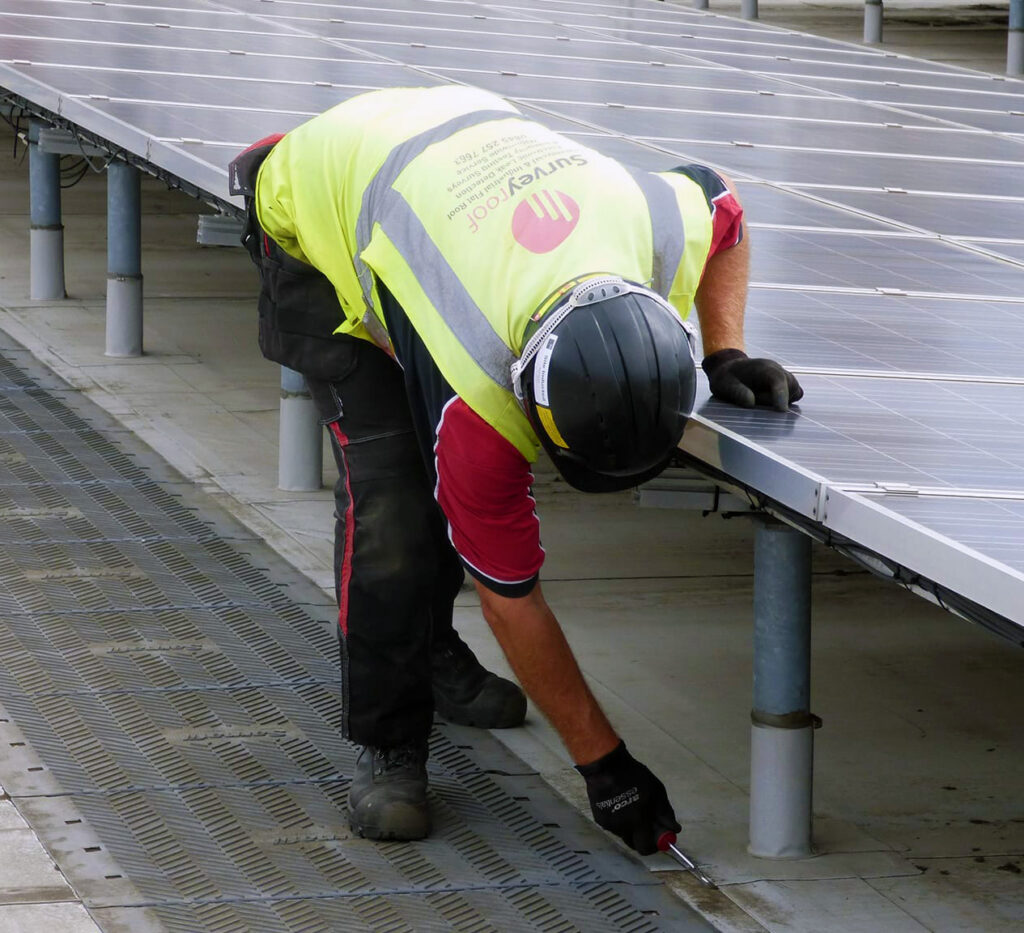
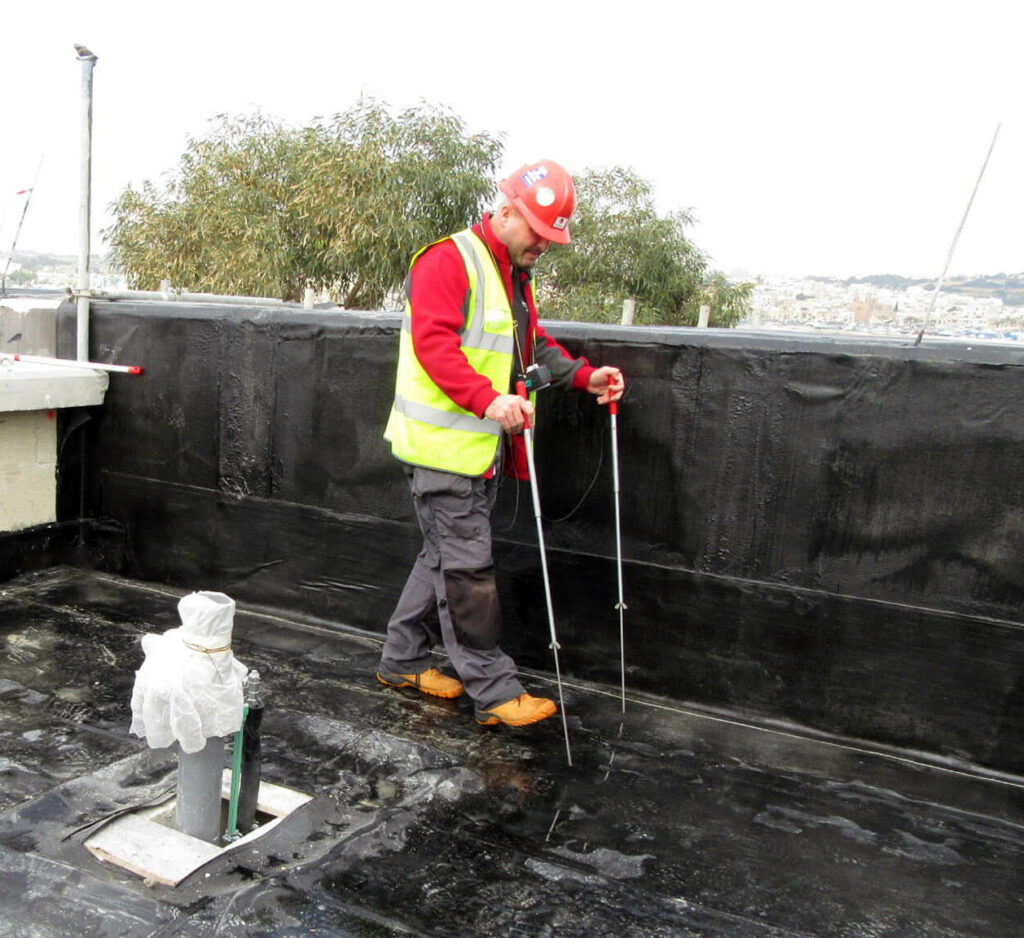
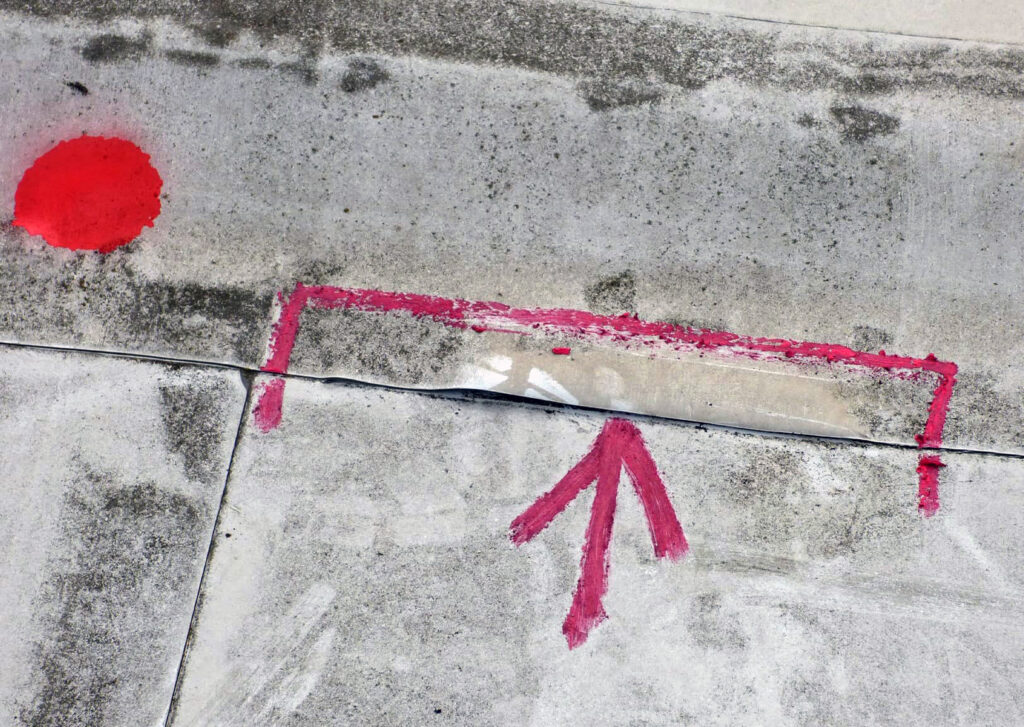
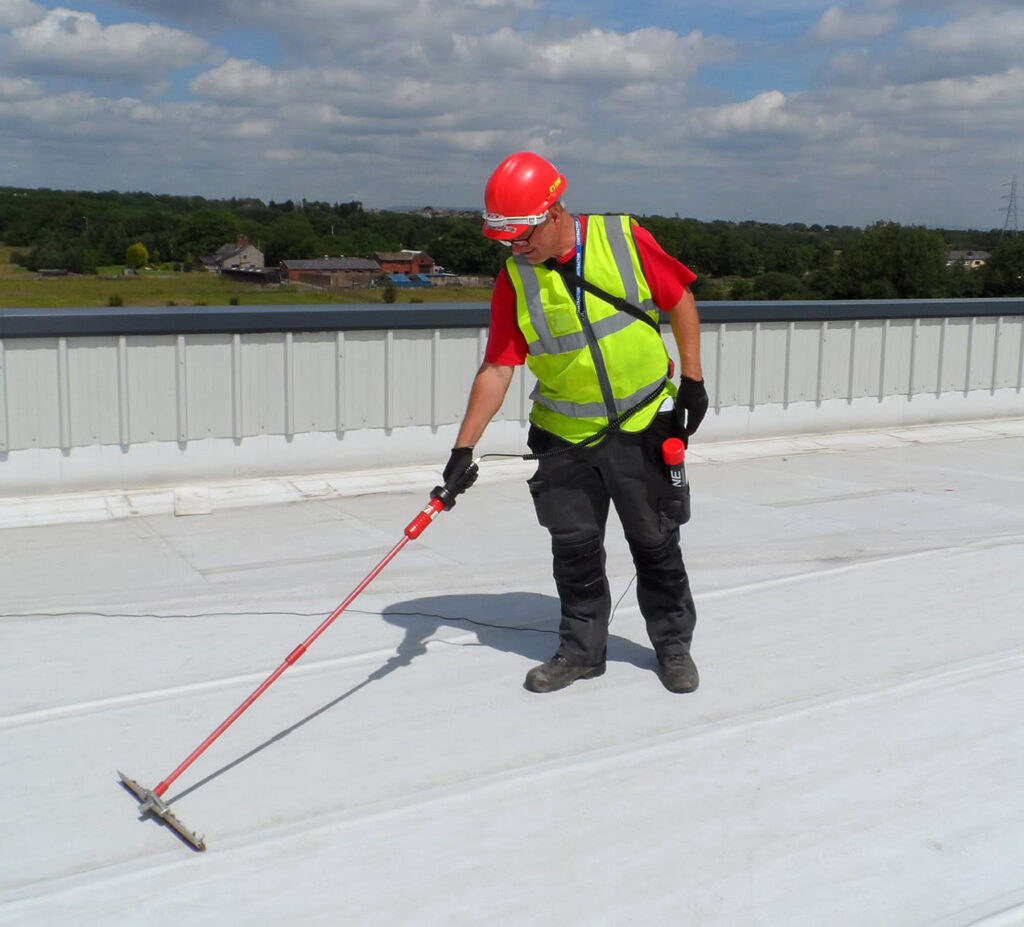

Why electronic testing?
A flat roof membrane can be compromised by a defect almost too small to see. A pinhole, a poorly sealed lap or a puncture from a dropped tool can let water into the roof build-up long before anything shows inside the building, and by the time it does, moisture may have travelled well beyond the point of entry.
Electronic leak detection finds those defects while they’re still small, precisely located and inexpensive to repair. Instead of exploratory strip-up or repeated repair attempts in the wrong place, you get defect positions marked and documented, so repairs happen once, in the right spot.
Nothing is cut. No core samples, no test squares, no destructive investigation. The roof is in the same condition when we leave as when we arrived.
The Three Methods
We select the method on roof construction, membrane type, weather conditions and test area, not on preference.
| High Voltage Dry Test | Earth Leakage Wet Test | Scan-Map™ | |
|---|---|---|---|
| Also known as | Holiday detector test, spark test | Dynamic Area Mapping, EFVM | Low voltage wet testing |
| Conditions | Dry membrane | Wet — rainfall or wetted down | Wet — water applied to test area |
| Voltage | High | Low | Low |
| Best for | Handover verification and quality control on exposed membranes | Tracing the source of an active leak | Speed — and the only method that tests EPDM |
| Read more | High Voltage Dry Test | Earth Leakage Wet Test | Scan-Map™ |

High Voltage Dry Test
A high-voltage integrity test carried out on dry, exposed membranes, identifying pinholes, punctures, discontinuities and workmanship defects across the membrane surface. Where the roof type suits it, it supports the quickest testing schedule of the three.

Earth Leakage Wet Test
Carried out in wet conditions during rainfall or after the test area has been wetted down. This method traces the direction of current flow back to the point where moisture is entering the membrane. That makes it the strongest choice when a leak is active and its source needs finding.

Scan-Map™ & EPDM
A faster low voltage wet method, and the one that opens up membranes the others can’t reach. Conventional electronic testing relies on the membrane being non-conductive, which rules out EPDM entirely. Scan-Map™ tests it where the roof assembly allows.
Our survey teams carries both dry and wet capability testing
This is so the method is chosen on-site rather than committed to at quotation. If the weather turns on the day, the survey adapts rather than reschedules.
| Membrane | Dry test | Wet test | Scan-Map™ |
|---|---|---|---|
| PVC single ply | Supported | Supported | Supported |
| TPO single ply | Supported | Supported | Supported |
| Mastic asphalt | Supported | Supported | Supported |
| Built-up felt | Supported | Supported | Supported |
| Liquid applied systems | Supported | Supported | Supported |
| EPDM | Not supported | Not supported | Supported |
Electronic testing also needs a conductive path beneath the membrane. A membrane laid directly onto structural concrete or a metal deck provides one. Where the substrate is non-conductive, insulation board or coverboard the assembly may need a conductive layer installed beneath the membrane for testing to be possible.
On new build that’s worth specifying early rather than discovering late. We’re happy to advise at design stage. Roofs with significant overburden ballast, paving, green roofs may need the surface layer lifted within the test area, or may not be testable in their current state. We establish that before quoting, not after arriving.
When to commission electronic leak detection
Without proper testing, repairs can become a process of trial and error. That can waste time, increase cost and still leave the original issue unresolved.
Testing removes the guesswork. Commission it:
Before handover of a new roof
While the roofing contractor is still on site and responsibility hasn’t yet transferred
When a leak is active but its source isn’t obvious
Particularly where previous repairs haven’t resolved it
After remedial works
To verify the repair actually worked
Before and after solar PV or plant installation
Establishing condition before, and identifying installation damage after
Before acquisition, lease or refurbishment
So roof condition is known before the commitment is made
Why Independent Testing Matters
Shared Risk
When a roof membrane fails, responsibility and cost can become unclear. Contractors, building owners, tenants, manufacturers and maintenance teams all need evidence.
A Neutral Starting Point
Independent testing gives everyone a clearer starting point, cutting guesswork before the next step is agreed and reducing disputes over who is responsible.
Clear, Documented Evidence
Surveyroof provides detailed reporting with photographic evidence and defect locations, helping you understand what has been found and where attention is needed.
No Repair Agenda
Because we are independent and do not carry out repairs, our role stays focused on accurate testing and clear reporting you can trust and act on with confidence.
Not sure which applies? We’ll recommend the right method before anything is booked.
Call 0845 257 7663
Our Roof Survey & Leak Detection Services
Electronic Leak Detection
Non-destructive moisture mapping helps locate hidden moisture within the roof build-up and understand the extent of the problem. This supports targeted repairs and better maintenance decisions.
High Voltage Dry Test
A high-voltage integrity test carried out on dry, exposed membranes, identifying pinholes, punctures, discontinuities and workmanship defects across the membrane surface.
Earth Leakage Wet Test
Carried out in wet conditions during rainfall or after the test area has been wetted down. This method traces the direction of current flow back to the point where moisture is entering the membrane. That makes it the strongest choice when a leak is active and its source needs finding.
Scan-Map™ and EPDM Testing
A faster low voltage wet method, and the one that opens up membranes the others can’t reach. Conventional electronic testing relies on the membrane being non-conductive, which rules out EPDM entirely. Scan-Map™ tests it.

Membrane Condition Surveys
Independent electronic leak detection and integrity testing for flat roof and waterproofing membranes. Ideal for identifying breaches, pinholes, punctures, installation defects and membrane failures on new or existing roof systems.

Thermal Imaging Leak Detection
Thermal imaging roof surveys help identify saturated insulation, entrapped moisture and areas of concern that may not be visible during a standard inspection. A useful method for predictive maintenance and roof condition assessment.

Moisture Mapping
Non-destructive moisture mapping helps locate hidden moisture within the roof build-up and understand the extent of the problem. This supports targeted repairs and better maintenance decisions.

R.A.I.N.™ Roof Monitoring
R.A.I.N.™ is Surveyroof’s roof monitoring and early warning service framework, supporting continuous insight into roof condition using sensor-based monitoring technology. It helps detect moisture and roof incidents earlier, particularly where ongoing visibility is important.

Visual Condition Surveys
Detailed visual roof condition surveys with photographic reporting for industrial metal roofs, aluminium standing seam, pitched tiled roofs and other roof areas where a clear condition report is needed.

Roof Maintenance Programmes
Planned roof maintenance surveys designed to help extend roof life, reduce unplanned costs and identify issues before they develop into larger failures.

Pre Installation Solar Surveys
Planned roof maintenance surveys designed to help extend roof life, reduce unplanned costs and identify issues before they develop into larger failures.

Industrial Roof Surveys
Independent industrial roof surveys and inspections for factories, manufacturing plants, warehouses, industrial estates, processing facilities and logistics operators across the UK.

Commercial Roof Surveys
Independent commercial roof surveys and inspections across the UK for property owners, facilities managers, managing agents, retailers, hoteliers, logistics operators and solar installers.